Translated by OfferLand from the original Traditional Chinese post. View original

jxi
Nov 8, 2024
【GRE High-Score Experience】
School and major: NYCU Bachuan program, senior year
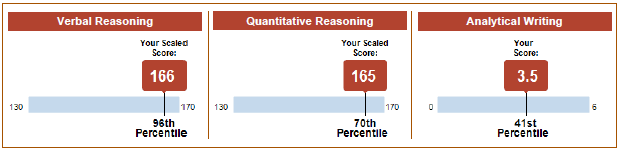
Score: verbal 166 quant 165 aw 3.5
Test date: 2024/10/20
【Prep notes for each section & how I prepared】
【Vocabulary】
Teacher Li Shuo’s vocabulary breakdowns are really useful. My vocabulary was very small at first, so I had no idea how to prepare for text completion or writing. After signing up with Wordgod (字神), I spent three weeks studying nothing but vocabulary and math, without touching the rest of verbal. After memorizing about 60% of Li Shuo’s vocabulary tree and finishing both the A and B rounds of Li Shuo’s vocabulary course, verbal (especially text completion) became much easier to prepare for.
【Text completion】
Li Shuo analyzes sentence patterns and transitions very systematically. Make sure you write down the common transition words and sentence structures covered in class. GRE has a lot of long, difficult sentences, so you have to read very carefully in reading and text completion, or you can easily misread the meaning. So follow Li Shuo’s logic as much as you can: get used to imagining Li Shuo solving the question as you read it, and think about how Li Shuo would break it down and apply the logic. I believe you’ll be able to solve most questions that way.
【Reading】
Teacher Ai teaches reading in a very unusual way, and it worked especially well for me. Ai doesn’t just explain what a passage says, but analyzes and solves questions through the passage’s background, American culture, the links between sentences and the structure. This got me more and more used to GRE reading passages, because their arguments are mostly consistent, and the same author may even come up for discussion in different questions. So with Ai filling us in on the background knowledge, reading gets simpler and it’s easier to make connections.
【Quant】
Teacher Zhong Di’s question bank and problem-solving techniques are very practical, especially for work, time and rate conversion problems. Students get a very versatile framework and way of thinking, so whenever a similar question comes up, you can just apply the template and you’re sure to get the answer. The questions picked for each topic are also really interesting. Students from East Asia should be stronger in math than Western students, yet the in-class questions were not easy at all, and they often still taught me new problem-solving logic and concepts.
【Logic】
Logic questions are the most abstract part of the GRE for me, because it often feels like the interpretation and even the answer can vary from person to person. But Zhong Di walks students through the question types one by one and helps them build the logical thinking these questions are looking for. So before class and before reading the questions, I’d suggest treating yourself as a blank slate: step outside the way you usually interpret problems and, as much as possible, build a new method just for GRE logic questions.
【Writing】
Ai’s approach to teaching writing is very efficient; even a three-hour class taught me a lot. The most useful part, I think, is the outline template. Whether or not a GRE writing prompt asks you to address the opposing view, if you use the template and planning method well, you can write three body paragraphs. Ai also gave us lots of ways to open paragraphs and handy sentences for stating your position. Pick a few you like and use them again and again on practice prompts, and you’ll have more time to think and check in the test.
【GRE real-question course】
I took Ai’s reading real-question (真经) course, and the hit rate was really high. Of the 5 reading passages on my test (2 medium, 3 short), 3 were ones we’d covered (2 short, 1 medium). And Ai’s teaching made these passages stick in my memory, so when they came up I basically went straight to the questions, and if I really forgot something I just reread a bit. I’m really glad I took Ai’s course.
【Study plan】
I spent about 1.5 months preparing for the GRE. For the first two weeks I did nothing but memorize vocabulary and take quant classes. Between Li Shuo’s vocabulary book, the A and B classes and the flashcards in the wordbranch app, I learned around 800 words first. Only after building up my vocabulary did I start the text completion and reading video courses, and even then I kept memorizing words. Wordgod provides plenty of vocabulary resources, so you’ll never run out of words to study.
Starting three weeks before the test, I did a full practice test every morning, then spent about an extra hour reviewing it and noting down words I didn’t know. After finishing all the video courses, my practice test scores were around 315. With about 2 weeks left, I started grinding through real text completion questions on 雷哥GRE (Leige GRE). Each unit has only 10 questions, so I could do them between classes or on breaks, and save my progress even if I didn’t finish a unit. I did about 50 text completion questions a day. Of course, I also wrote down and memorized the words I didn’t know from those questions. For reading, I took Ai’s real-question class, 6 sessions of three hours each, which I think is plenty. Together with the practice test questions, I was actually doing more than 10 reading questions a day.
In the last week I stopped learning new words. By my count I picked up about 1,500 words over that month and a half (not all of them needed memorizing, since some are just extensions of other roots: once you learn the simple version, you can understand it with an in- added or with an adjective or noun ending). That last week I reviewed old vocabulary every day, about 750 words a day, and started redoing questions I’d gotten wrong. If I still got one wrong, I saved it to look at again the day before the test and the morning of.
【Test center report】
I took the test at the whygo language center. The only thing to watch out for there is that the air conditioning isn’t very consistent. I tested there two weeks in a row, once for the TOEFL and once for the GRE, and the temperature on the two days was quite different. If you’re sensitive to temperature, bring an extra jacket or hoodie.
【Words of encouragement for other test takers】
Studying for a test is a long haul, and only steady practice keeps you improving. That’s why rest and relaxation in moderation matter a lot, for body and mind alike. If a health problem forces you to take a few days off from studying, that’s a real shame, because not only do you stop learning new things, you also forget what you’ve already learned. So eat well and sleep enough, keep your body strong enough to study, and you’ll be able to perform at your full ability on test day.
【Score report】