Translated by OfferLand from the original Traditional Chinese post. View original

mrharrystudy
Updated Dec 13, 2023
Interview: A Current RMIT Student (2023)
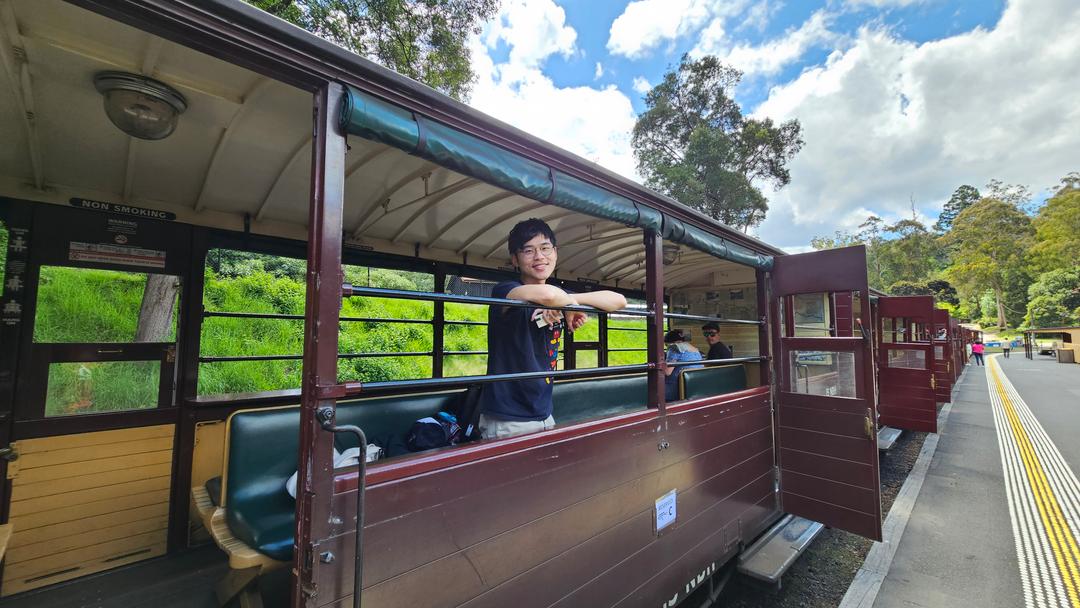
🙌🏻 Interview with Henry
RMIT University - Master of Artificial Intelligence
——
Master's: University College Dublin
Major: Data and Computer Science
Bachelor's: National Taiwan University / Soochow University
Major: Mathematics / Financial Engineering and Actuarial Mathematics
Work experience: Data analysis
——
Admitted to:
RMIT - Master of Artificial Intelligence
Monash - Master of Artificial Intelligence
Adelaide - Master of Artificial Intelligence and Machine Learning
——
📍 A different way of learning
In Taiwan, I didn't have to spend much time studying outside class, but class hours were longer, and the teacher walked you through most of the material step by step. At RMIT, you still have to learn to teach yourself. If you don't understand something, you have to think it over and reread it several times until you know what question to ask. Of course, there are still practical classes (tutorials) where you can ask questions, and you can book office hours to discuss problems 1:1. But all of this assumes you already have a basic grasp of the material (so you know what to ask); you can't expect your questions to get solved if you haven't looked at it at all or didn't understand it. That shows how much RMIT values independent learning, which is something I really hope to carry with me for the rest of my life, and so far I feel I've gained a lot.
📍 Teaching style
I really like RMIT's teaching style. Every class has pre/in/post class parts. The pre-class covers most of the course content, and I spend at least 2 hours preparing before the actual class. Once I have a sense of the chapter, I go to the in-person in-class session, where the teacher explains the content in a relaxed way, including how it extends to everyday life and how it's applied in different fields. That's when you can raise any questions you ran into, and the teacher also poses questions for the class to think about and discuss, for example what the chapter taught you, or what applications you can come up with for what you've learned. This usually takes 1-2 hours, and if you've absorbed the pre/in class well, the post-class only takes 30 minutes.
📍 Coursework
I'd say the workload is pretty heavy, and you can't relax even after class. RMIT's teaching leans toward practice. On the bright side, our exams don't have many proof questions, and they don't demand much analysis of the math behind why an algorithm works. But you still need to know how to explain it. Because of that, when you implement things, you need to understand the principles to write the code; you don't have to memorize the full proof, but you still need to understand every step. This takes a certain amount of initiative, because the courses don't focus on these things and you have to read up on them yourself. So if you choose AI, I'd suggest that you at least not hate math, and that you can enjoy AI rather than find it boring; then studying it will come more easily.
📍 My classmates
The students I've met at RMIT have all lived in Australia for a while, and I rarely meet international students like me. In my group project this semester, my two teammates were Asian, and I only found out halfway through the semester that they spoke Chinese. We communicated in English the whole semester. If you want to improve your English, or you want a foreign-language environment, RMIT is a really good choice. Like me, a lot of people have pretty strong English reading and listening skills, but when it comes to speaking, they struggle to say what they mean and still don't know how to put sentences together. The environment here forces me to try to express my ideas with whatever vocabulary I have. It may feel clumsy at first, but it gets better.
📍 Life in Melbourne
Food-wise, I'm still more used to Asian food, and that's not hard at all in Melbourne. I can easily buy the ingredients and seasonings I need at supermarkets (Woolworth, Coles, …), and there are lots of Asian restaurants: Japanese, Korean, Taiwanese, Vietnamese, Thai, you name it. Cheap dairy products also make baking desserts easy in Melbourne. Cooking has pretty much become my daily entertainment. Besides regular meals, I also make desserts and try different flavors now and then, so life never gets dull. Surprisingly, excluding utilities and rent, I spend less than 100 AUD a month living in Melbourne, and of course that's basically all on ingredients. Unlike in Taiwan, if you can cook for yourself in Melbourne, your overall food costs drop a lot.
📍 Any places to recommend?
For desserts I highly recommend Brunetti. They have a huge selection and two shops right in the city center, where you can eat in or take away, and it's a great place to chat with friends. Whether you have a serious sweet tooth or you love the layered mix of ingredients in a dessert, Brunetti has you covered. I also really recommend the cakes at Blackstar, which also blend every ingredient just right. Maybe you've seen Remy in Ratatouille eating two different foods at once, with the different flavors and textures forming a wonderful symphony in his head. Do you long for that feeling too? Then come try Blackstar.
📍 Differences in daily life
On weekends, for example, people drive for a few hours to some place (personally, I'd call it the wilderness) and spend the day there. Or they take their fishing gear to the beach and fish. Or they find a café with no competition for a hundred miles, order a coffee that tastes as ordinary as it gets but is so expensive you'll remember it, and stare out the window at the trees and the lake. I'd usually also suggest ordering fries; you can trust Melbourne's fries. In the end, I prefer playing guitar at home, or brewing a pot of twinings Earl Grey and going to soak up the sun in the park across from my place.
📍 Must-bring items for Australia
I think it depends on the person. I get nervous easily, so I stuffed my suitcase full. Some things really weren't necessary, but having them gave me a sense of security, and I still think it was worth it. When you first arrive, make sure you can stay connected, which covers your phone, Australian internet, charging cables and adapters. Next, you need to be able to sleep well, which means personal items, lotion, a comb, nail clippers and so on. Then some Australian cash and at least one card that works abroad (ideally on different card networks). After that, you just need to make sure your electrical appliances support international voltage. If they don't, bring a transformer. For students, I'd also suggest bringing some stationery. It's not hard to buy here, but stationery in Taiwan is cheap and good.
📍 A few words for everyone
I'm so glad I made this decision. When I was in school before, I didn't really think about what I wanted. I just followed the path everyone else took: study, graduate, then work. Luckily, I got the chance to switch tracks a few times while working and found a field I was more interested in, and only after working for over 2 years did I choose to come to Australia to study it further. Being back on campus makes me happy. Because I had savings, deciding to study abroad wasn't that hard, and successfully studying and living abroad has given me a great sense of achievement. And because I chose to study abroad after careful thought, I'm much more motivated to study than before. In the past I mostly just wanted to prove my abilities; now I'm more driven by curiosity, and I enjoy it. This decision makes me feel like I've taken back control of my life. I'm living the life I want and feel closer to the goal in my heart. It's amazing.
[OfferLand Partner Study-Abroad Consultant]
🙋🏻♂️Independent UK/Australia consultant Harry
👉🏻 Click here for a consultation 👈🏻
Want to apply to study in the UK but save on agency fees? Want to apply to study in Australia but save on application fees?
Want to apply on your own but still have someone to help?
✔ A consultant who really takes care of students: efficient + quick to reply!
✔ Best of all, [no agency fees]; a service fee is charged only for certain specific services! You'll be told about any charges in advance
✔ Helps you plan your study-abroad timeline, keeps track of application details, provides admission-chance analysis and a strategic university application plan, customized document coaching, and follow-up services for (off-campus) housing, visas and pre-departure


Max
Dec 15, 2023
風景讚
mrharrystudy
Dec 15, 2023
👍🏻