Translated by OfferLand from the original Traditional Chinese post. View original

小歐特派員
Updated Jun 28, 2024
Application Story | How I Landed Offers from Top Schools with Work Experience and DIY Essays: Applying to US MSBA Programs
Today we've invited Ruth (TOEFL 101, GMAT 650), who will soon start the MSBA at UMN, to share what applying to US MSBA programs was like! A graduate of the Department of Finance and International Business at Fu Jen Catholic University (GPA: 3.68), Ruth has nearly two years of work experience at NielsenIQ and received offers from several top schools:
University of Minnesota (UMN) MSBA
Emory University MSBA
Duke University MQM
Purdue University MSBA
University of Rochester MSMA (Marketing Analytics)
University of Pittsburgh Master of Science in Marketing Science and Business Analytics
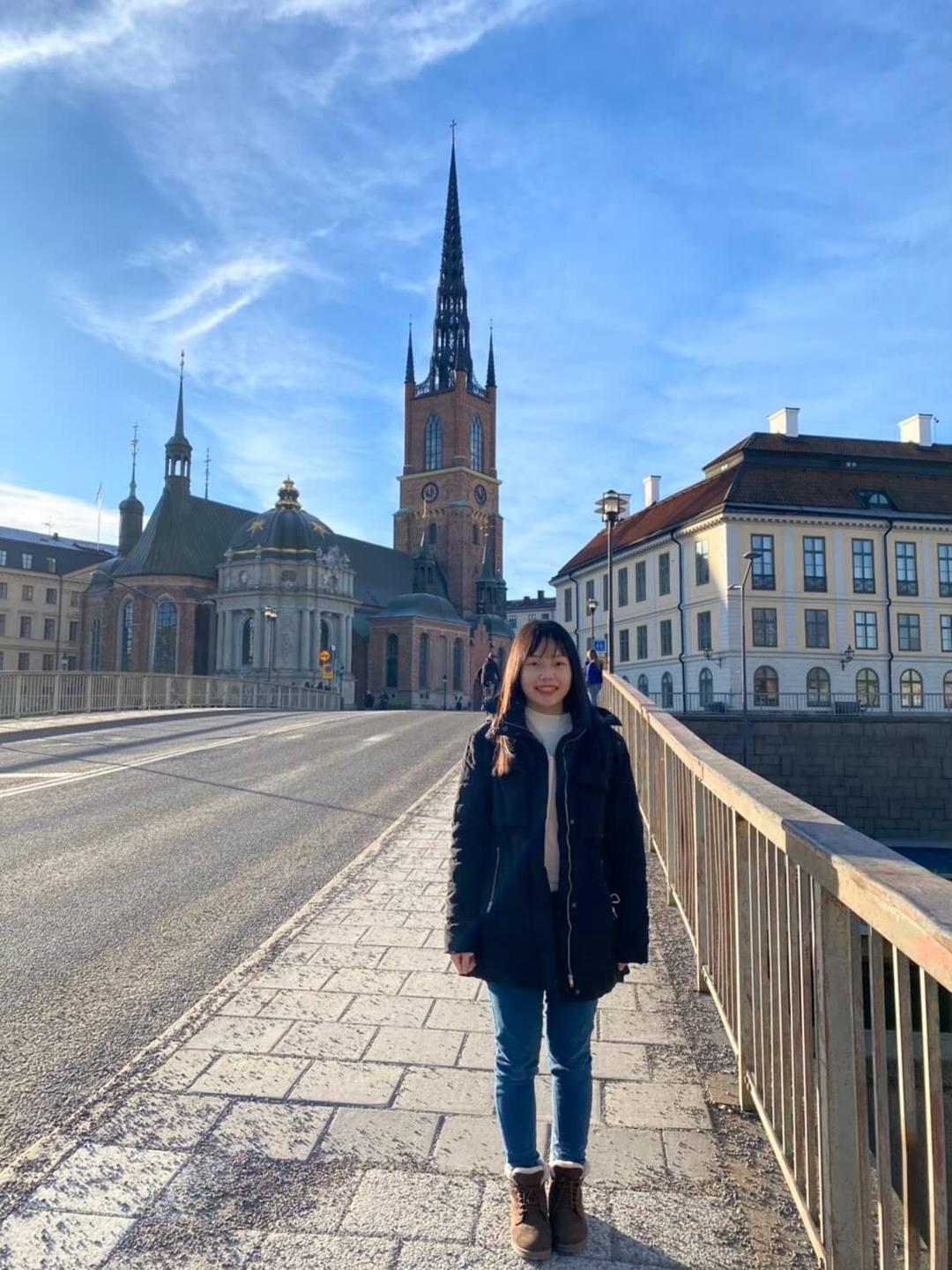
1. Why study abroad
Why did you choose to study abroad after working full time?
💡 I'd dreamed of studying abroad since I was a kid but never acted on it. Near the end of college, I drew up a career tree and wrote “analyst” as my short-term goal. I decided that if I found an analytics job, I'd work first and then reassess whether I really needed to study abroad. I wrote “analyst” because I'd done consumer behavior research in college and found I really enjoyed combining data with business observation to look at how consumers behave.
Once I started working, I wanted a systematic way to bring together what I'd learned and my hands-on work experience so I could take on more possibilities later in my career. So I decided to apply for a master's in business analytics, which was also a way of making my dream come true. I chose US schools because many companies are headquartered in the US, which would give me a fuller picture of the market as a whole.
Your undergraduate background is finance and international business. Why switch to business analytics?
💡 My department in college taught a wide range of business skills and knowledge. Besides basic economics and accounting, there were elective courses in statistics and data analysis, financial management, marketing and more. That period also gave me the chance to explore which fields I wanted to keep digging into.
I really liked statistical analysis and marketing in college, so at first I wanted to apply for marketing analytics. But once I started working, I realized that besides marketing, things like supply chain, finance and product are also key parts of how a company runs, and the techniques taught in a business analytics program can be applied much more widely at work. So in the end I decided to apply for business analytics.
2. Building up experience
Of your full-time job, internships, college courses, credit programs and other experiences, which helped most with your business analytics applications or your career? Why?
💡 For applying to business analytics programs, I think my work experience and extracurricular activities helped most. Work experience showed me my strengths and weaknesses in the workplace, so in interviews I could use more concrete examples to show schools my traits and how I handle crises. Some positive, quantified results from work also backed up my abilities. Beyond professional skills from school and work, schools also want to know what kind of person “I” am, so experience outside school helps them understand my background and interests. It's a great chance to sell yourself and show the admissions team you can add diversity to the school. As for business analytics skills, pretty much every business analytics student has some experience processing or analyzing data with Python, SQL, R, so I treat that as a must-have.
💡 For my career, teamwork and internships in college helped most. Group presentations in class and student clubs let me keep trying things where mistakes were more forgivable, and learn how to collaborate and communicate efficiently. Thanks to what I gained as a student, I can now handle more complex issues at work from a broader perspective, and I know better how to learn communication skills from colleagues and managers. Before leaving school, I also saw internships as an important way into the workplace. An internship sits at the crossroads between school and work, and it's a valuable chance to explore your career direction again. My two internships in my senior year also helped push me toward my choice after graduation.
How did you build up this experience? For newcomers who don't have much hands-on analytics experience but want to get into the field, what would you suggest they do first?
💡 Before graduating
Take more analytics courses or programs in college
Free/paid online courses (Coursera, DataCamp, edX, YouTube, etc.)
Take on an analytics-related role or tasks in student clubs
Internships
💡 After graduating
Free/paid online courses (Coursera, DataCamp, edX, YouTube, etc.)
Let your manager know you want to move into analytics and discuss how to get there
3. Preparing application materials
Can you share some of the secrets behind the SOP essays that got you into several schools?
💡 1. Be clear about why you're applying
I once heard Bernice, a UCLA MBA senior, talk about her application process. Based on the essay topics she shared, I built my own storyline for studying business analytics with this formula: Current experience + (Skills missing to reach the goal + How the target program helps) = Short- and long-term goals. The order I filled it in was: Current experience → Short- and long-term goals → Skills missing to reach the goal + How the target program helps. Finally, an example of how to use the formula: Because my goal is (short- and long-term goals), but right now I only have (current experience), I hope the school can (how the target program helps) so I can (skills missing to reach the goal)
💡 2. Show it to people from different backgrounds, ideally including someone from the field you're applying to
Everyone reads from a different angle and sees different things to improve, so you can weigh all the suggestions, revise, and send schools the version you're happiest with.
Would you recommend preparing your application essays yourself (DIY)? What's the biggest challenge of doing it yourself, and how do you overcome it?
💡 I'd recommend preparing your essays yourself. The biggest challenges are likely time management, finding resources and self-doubt
Time management: Planning the timeline, tracking progress and applying while working were all things I had to deal with. For planning, I looked up other people's experiences online and then adjusted them to the pace that felt most comfortable to me. For example, I'm more of a long-distance runner, so when others planned to spend a month or two on their résumé, I planned three months. With a clear schedule, tracking progress is more efficient: you know when you can slack off a little and rest, and when to start on the next document. Finally, the way I managed applying while working was to sleep less, while making sure both my work and my applications were high quality.
Finding resources: You can find resources in lots of places, like online, from friends and family, or from school. There are so many that at first you may not know where to start. To deal with this, for each document I picked two or three sample essays as my main references and then asked other people to read my draft. Once the document was about 80% done, I went back to some samples I'd liked but hadn't used as main references, as a final check.
Self-doubt: Since I was focused early on getting my documents done on time, my self-doubt mostly came right before submitting, worrying that I'd strike out everywhere. My fix was to focus on preparing for the next stage. As it turned out, it's a good thing I'd prepared interview questions early, because some schools sent the interview invitation just three days before the actual interview.
What was the biggest thing you got out of OfferLand's Mantou program (Mentor Program) during your applications?
💡 The Mantou program played a big part in getting my offers. It gave me the chance to have a mentor who had successfully applied to US schools guide me through the process, showing me from experience how to use my strengths to stand out among applicants. It also made me more confident when submitting my materials and in interviews. It had a positive effect on both my mindset and my application materials.
4. Weighing offers
Why did you choose the University of Minnesota (UMN) MSBA out of all your offers? What were the main factors you weighed?
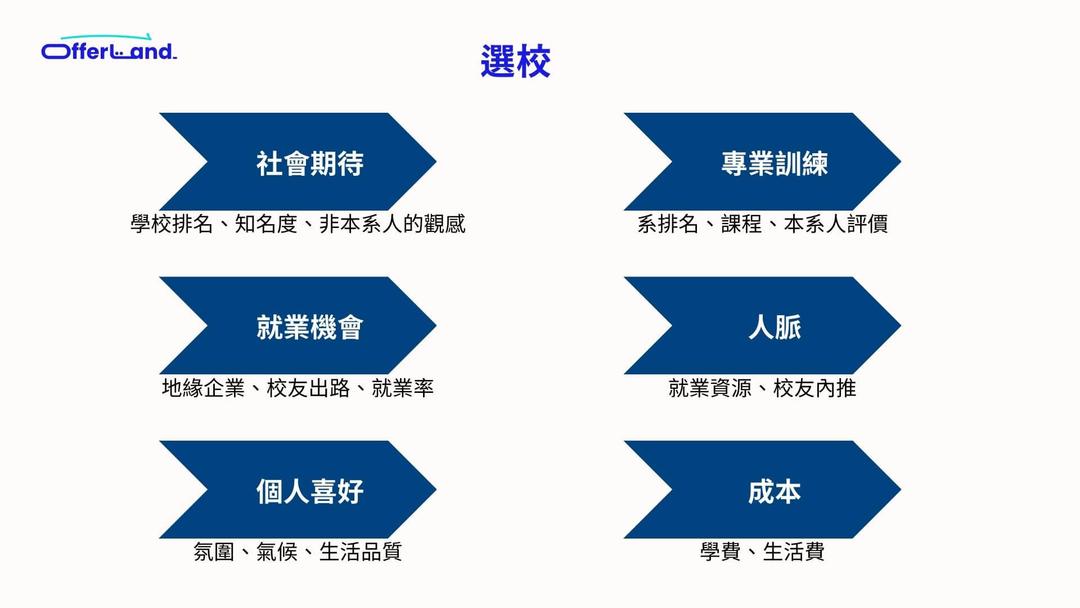
💡 I made a table listing the factors I cared about in choosing a school and weighted each by how much it mattered to me. In the end, I chose UMN mainly for its professional training and job opportunities. My factors included
Social expectations (school ranking, reputation, how people outside the field see it)
Professional training (program ranking, curriculum, how people in the field see it)
Job opportunities (local companies, alumni outcomes, employment rate)
Network (career resources, alumni referrals)
Personal preferences (atmosphere, climate, quality of life)
Cost (tuition, living expenses)
5. Other
Any advice for others who, like you, want to apply to grad school abroad after getting work experience?
💡 1. Once you've decided to apply to grad school, congratulations on already having work experience, which is a great thing to have. Whether you decide to keep working or quit, as long as you take responsibility for your choice, I believe things will work out.
💡 2. Applying while working isn't an easy road, but it isn't as hard as you might imagine either. Once you work through what the schools ask for step by step, you'll find that what you imagined was harder than actually doing it.
If you could do it all over again, would you make different choices in college or at your full-time job? Why?
💡 No. I think that when you apply, how you tell your story matters more than what story you have.
Schools in this post
- University of Minnesota (UMN)
- Purdue University
- Duke University
- University of Rochester (UR)
- University of Pittsburgh
- Emory University
See each school's applicant numbers, admit rates and past applicants' results

Jason 學長
Jun 28, 2024
Ruth 超讚 💪🏻💪🏻 今年也即將從 Mentee 變成 Mentor 了!!

Huang Mina
Jun 28, 2024
上次就聽過Ruth講座的分享,超讚!沒想到還有專訪🙏🏻🙏🏻

Ruth
Updated Jul 5, 2024
希望這次的分享可以幫助到有需要的人! 如果之後有遇到其他上述沒有提到的問題也可以再問我~ 想看申請過程的細節也可以到我的 Medium 看:https://medium.com/@yachin2963
Fang Ethan
Jun 29, 2024
msba感覺越來越競爭了...好多人申請
Anna Z
Jul 2, 2024
好奇為啥最後沒去Duke
Ruth
Jul 5, 2024
主要是經過第四點提到內容進行Offer評估選擇