Translated by OfferLand from the original Traditional Chinese post. View original

愛麗絲會夢遊
Updated Dec 31, 2023
Studying in Australia, Part 2️⃣
G’day~ Good afternoon, I'm Alice. Thanks everyone for liking my first post>< Next up, let's talk about my two years as an undergrad~
I started my bachelor's in July '19~ Every semester is 13 weeks with 4 subjects. Around weeks 6-8 there's a mid-semester essay, and in weeks 11-13 there's a final exam/final report. Of course some subjects add an online quiz, depending on how the lecturer sets things up, but most have 2-3 assessment items. Why do I say "most"? Because the bachelor's also has practical subjects! A practical subject is assessed on whether you pass your placement and on your attendance. It's called Integrated Nursing Practice off Campus, and it teaches the skills you can use on placement (including the nursing assessments from the diploma), so your skills build up year after year. Naturally this subject also costs the most money + prep time: you have to buy a uniform (yes! you read that right! a uniform!) and a nursing watch, get vaccinations, and deal with a pile of random paperwork (your friends come in handy again here!)~ Before the end of every class the lecturer also has us practise writing nursing notes once, since that's an essential skill for placements later on!
Where there's off campus there's also on Campus: the theory classes you take in the classroom, covering pathology, nursing interventions and so on in more depth than the diploma. This is where professional English really matters. Every semester comes with an on+off campus pairing, and I think you really learn a lot from it. Professional English is genuinely painful, and at first I also had to look up everything I didn't know one word at a time, but when you see something you recognise on placement you think, "Ah~ so that's what the textbook was talking about!" First-year placements are all in aged care homes. Each placement comes with a clinical facilitator (CF) and a group of students from the same cohort. There's a saying among nursing students: a good CF takes you to heaven, a bad CF takes you to the ancestral shrine (?). Enough chit-chat, let's start the first-year placement!
In my first year I was placed at a transition care facility. As the name suggests, people there wait for further assessment, which decides whether they eventually go home or into an aged care home. Before you officially start, every student has to know their scope of practice. In other words, you have to be clear about what you can and can't do as a first-year student, and what you can do is basically whatever you learned in your practical subject. Every student is assigned an EN or RN to supervise them (buddy nurse). It's completely normal to be nervous on your first day + first placement; everyone has a first time! On the first day the CF shows us around the whole facility: where we can take breaks, where we can eat and chat, and so on. Then you're assigned a buddy nurse. Day one is basically watching what your buddy nurse does all day, seeing what the routine is and how to make a plan for your day. Time management matters a lot for students and nurses alike. No matter how experienced you are or how well you know the job, a plan is a friend you can't do without! Next you join their handover and work out why this patient is here, why they need further assessment, and what needs extra attention when caring for them. Here's my first-person recollection of my first placement~
I remember we had a huddle at 7 at the nursing station with the morning-shift nurses, a bit like a tiny morning meeting that covers the most important things for the day. Then their team leader assigns us students a buddy nurse, and you stick to them all day. After the meeting comes handover. We have a fixed area A, which might have 8 patients with 2 nurses plus you, and you follow your buddy nurse and share her patients. When I first met my buddy nurse I introduced myself: my name, what year I was in, which day of placement it was, and that I could only do what's within my scope of practice (never assume people know, always spell it out!!). Handover is usually bedside: you greet the patient and ask whether they have any concerns. I have to admit it's normal to find handover really hard to follow in first year (not to mention I'm a slacker student haha)! Remember whatever you can and you'll get used to it over time. Don't get discouraged or upset!! Once handover is done you can start making a plan! Don't know how? No worries! Your buddy nurse is your first port of call for answers! You can follow theirs, and once you get it you can write your own! (example pictured below) About plans, there's something I want to say! Say you need to do obs at 0800: don't wait until 0800 to do them. If you can do something early, get it done early, because you never know what's waiting for you later hehe:) Remember this: if you want to finish on time, start getting ready for the next task early! In first year it's mostly helping patients shower and go to the toilet, manual handling and so on, doing obs, doing BGLs and giving out meds (for exactly which ones need supervision and which don't, check your university's scope of practice). The longer you're there, the better you'll get at all of this, and if you're willing to take a patient load, that's great! Joining their handover is bound to give you a real sense of achievement. Of course it's completely normal to struggle, but whenever you do, ask your buddy nurse or CF for help and they'll be very happy to help you! And last of all, the placement assessment form is called the ANSAT (out of 5, and you can't score below 3). Halfway through placement there's a self-assessment and the lecturer assesses you once too, so whatever you're weak in, you focus on improving in the second half of the placement!
How to survive placement:
1. If you're giving out meds that day, "proactively" tell the CF what each medication is for. For example, if it's a blood pressure medication, tell them it lowers blood pressure and what the BP you just took was; likewise, if it's a diabetes medication, tell them what the BGL is 『it shows you're serious and have studied and done your homework. They usually don't make nursing students know pharmacology inside out; after all we study nursing, not pharmacology. And of course if you get stumped, just say you don't know but you'll go home, look it up and tell them tomorrow』.
2. "Proactively" ask your buddy nurse if they need a hand, and show you're happy to help 『it leaves a good impression; after all, who knows whether the CF will go and ask the buddy nurse』.
3. In short! Always come across as keen to learn! Happy to help, and build yourself a good-student image!
My feelings in the first semester of first year, in short: really excited but also really scared. Lots of things felt unfamiliar, yet it also kind of felt like I was about to become a nurse>< Feeling pressure from coursework and placement is completely normal. When you're busy, don't forget to grab a meal and bubble tea with your friends to recharge~~
The next post gets into the tense early days of the pandemic, so stay tuned! If you have any questions, feel free to leave a comment:)
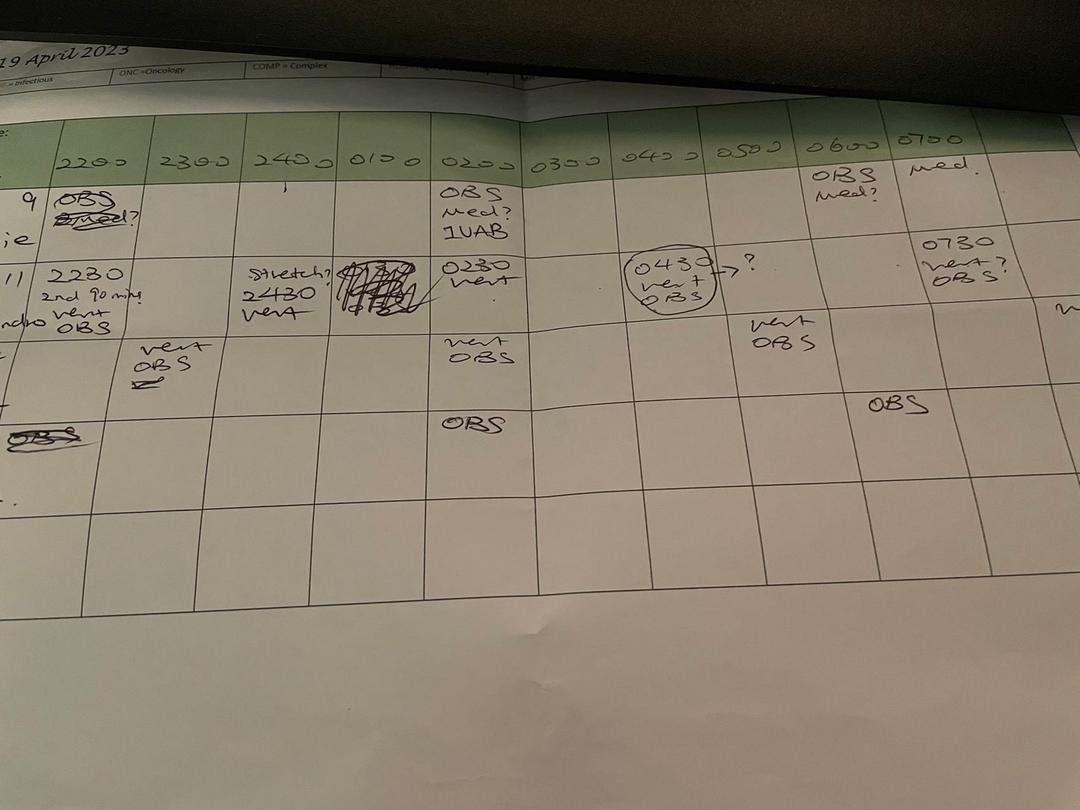
(⬆️This is the legendary good friend, the shift planner. It's not an aged care home routine, but you can see night shifts are still really busy)

(⬆️The uniform and nursing watch I paid for. The polo shirt is honestly pretty useless and expensive😂 so I'd suggest just buying second-hand!)
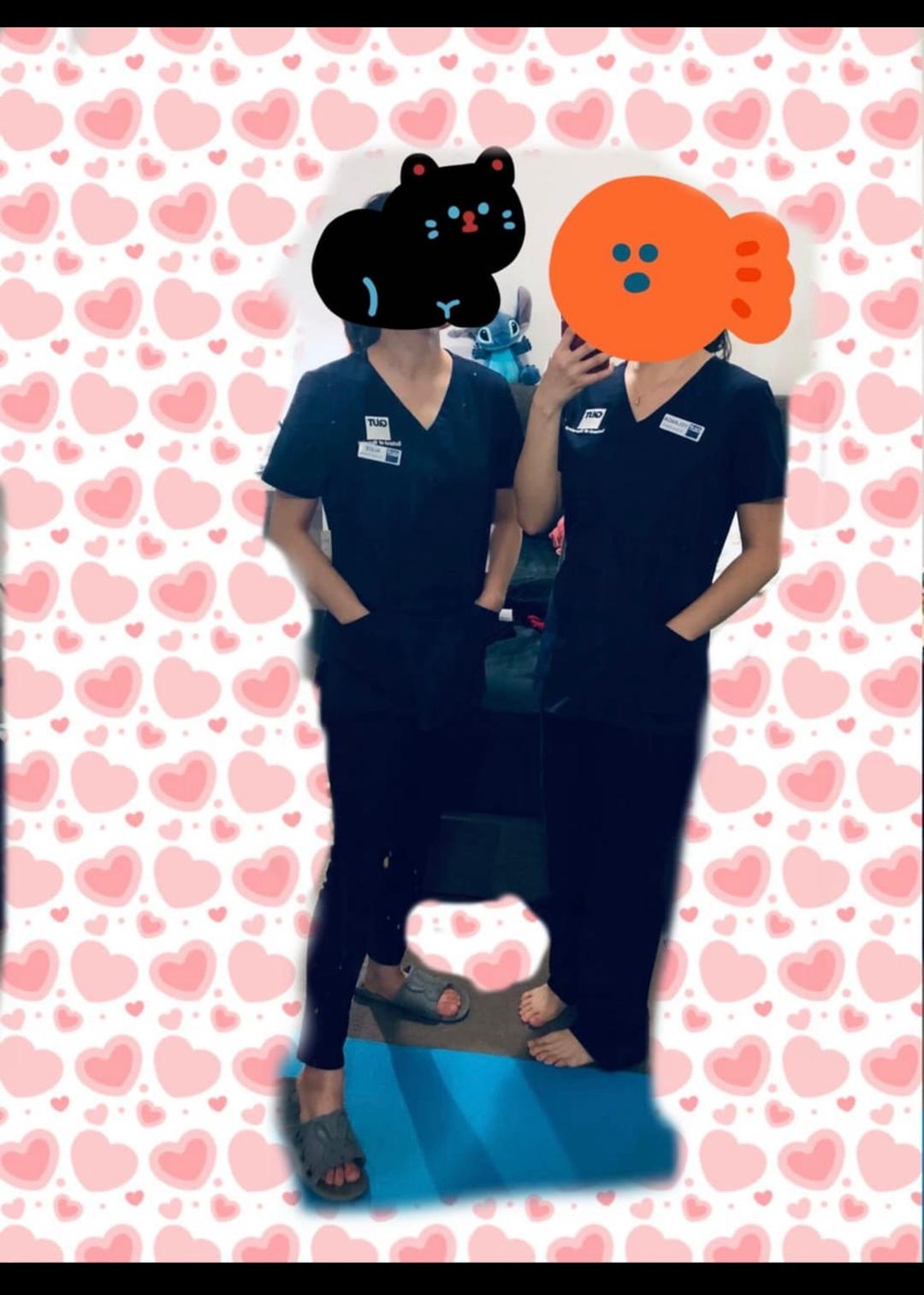
(⬆️These are the scrubs that came out shortly before I graduated: slimming and with pockets! My absolute favourite! Mine are brand new because they were the first batch, but for uniforms, second-hand is totally fine~)

Liao
Dec 31, 2023
看完樓主的四篇文章了 越來越期待之後去澳洲的生活了哈哈哈
愛麗絲會夢遊
Jan 1, 2024
啊哈哈哈哈先預祝你有美好生活~~