Translated by OfferLand from the original Traditional Chinese post. View original

mrharrystudy
Feb 26, 2025
✨ Interview with a 2024 Durham MSc Business Analytics admit
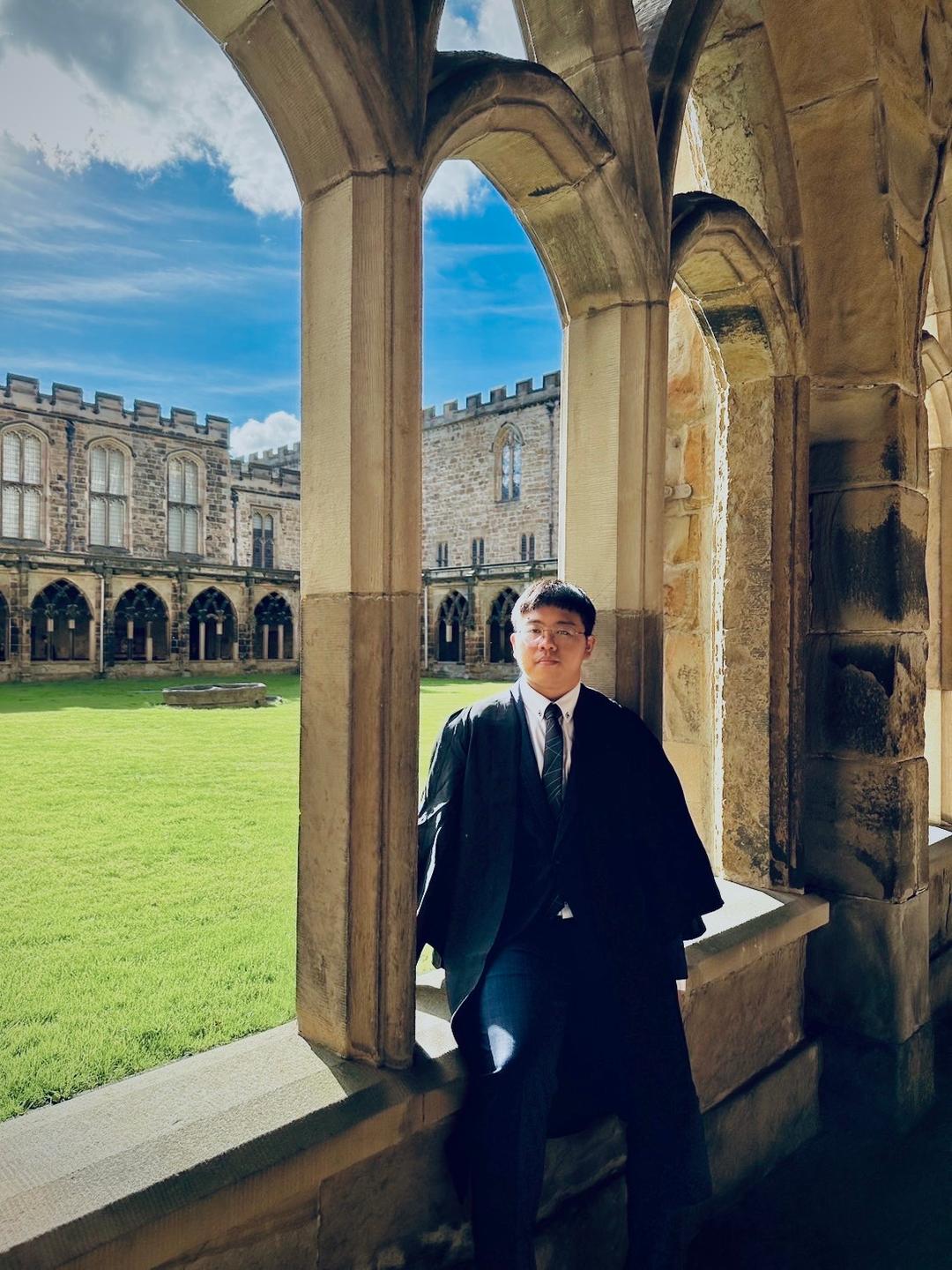
📍 Interviewee background
Jason
Bachelor's: Fu Jen Catholic University
Double major: Business Administration
Graduating average: 80.88
IELTS: Overall 7.0
Admitted to:
Durham - MSc Business Analytics
Bristol - MSc Business Analytics
Southampton - MSc Business Analytics and Management Sciences
Warwick - MSc Business with Marketing
❤️ IG post
📍 Why a BA master's?
I studied business administration in college. As everyone knows, that major covers everything but nothing in depth, so in my third year I did a lot of research, hoping to find a way to make myself more capable once I entered the workforce. Along the way I discovered business analytics (BA). It would teach me how to use programming to analyze companies, giving me a deeper understanding of how a business runs, and it would let me apply what I learned in college to make sound decisions based on the analysis. So in the end I chose BA.
I chose the UK because a master's in the US takes 2 years, while the UK takes only 1 year. I think that's better value, and the coursework isn't any less or worse than in the US. UK programs are quite substantial too: classes include real case discussions and hands-on programming, and I learned data cleaning, analysis and modeling. A cross-disciplinary program like this lets me master technical skills and also understand how to use data to drive business innovation and decisions.
📍 Studying BA with a business background
Coming from a pure business major, the biggest challenge in BA is probably programming! I did have a required programming course in my first year of college, but it only covered the most basic of basics. Here we use more advanced methods for analysis, such as Python, SQL and Excel.
If there's anything I still don't understand after class, I discuss it with classmates or ask ChatGPT, which writes out detailed explanations for you, and then we use those to understand it. It makes learning much faster!
📍 Starting from the same line
I don't think our program is especially hard. I really like Durham's course design: it builds everyone's foundation first and then goes deeper into the material, so I haven't run into any big problems so far. The professors are also very kind; if you ask questions after class, they're happy to help every student.
BA students come from business and science backgrounds. At the very start there's Introduction to Business Analytics, which covers the basics of business and Python, so that after filling in the concepts you need for BA, everyone starts from the same line.
📍 Is the workload heavy?
So far the courses aren't too busy, but since they're taught in English, I always preview the material first and reread it after class to reinforce it.
Our courses combine theory and practice and are divided into lectures or workshops, and practicals. Lectures teach the theory, and the other two apply it to real examples. For instance, in class the teacher only tells you what a programming command means, but you won't really understand it without trying it, so the teacher walks everyone through the code, trying different commands to see what happens. Afterward we get a dataset to clean and analyze with code.
Usually it's a group assignment to discuss, or learning to analyze some data with code. Besides being fun, I personally think you can learn a huge amount here!
📍 A collegiate university
Durham, Cambridge and Oxford are the only three collegiate universities left in the UK. Durham has 17 colleges, which differ in whether meals are included and whether gowns are worn. When the university emails you to choose a college, it includes a table summarizing this information. You can also check each college's IG for the past year's events to find the one that suits you best!
Note that your college's location is usually where your accommodation is (unless you're assigned housing outside the college), so distance is worth considering. You can compare the locations of the colleges and your department on Google Maps to judge how far apart they are. Otherwise, if your accommodation is up the hill and your classes are down the hill, commuting up and down every day will be exhausting.
The university asks you to list three college choices, but because of accommodation, you may be randomly assigned to another college, so the final result also depends on luck.
Colleges hold lots of events, such as Formal Dinner, Movie Night or Field Trips, and the most special is Formal Dinner! Take my college, University College (located in Castle, Durham's oldest and most famous castle): the building is like a castle, and you dine in the hall in formal wear and gowns. The atmosphere is amazing.
I strongly recommend going to a Castle Formal Dinner at least once. Students from other colleges can also pay to dine at Castle.
📍 Living in Durham
I've been in Durham for 4 months now, and I love this city! Life here moves at a fairly slow pace, and walking along the narrow streets and stone bridges and among the old buildings gives you a strong medieval feel.
Durham is famous for its cathedral and our University College castle (both World Heritage Sites), but my top recommendation is the riverside! When the weather's nice, you can stroll along the riverside path and see the sunlight on the cathedral. It's really beautiful!
📍 Where to go over the Christmas break?
Over the Christmas break in December, my friends and I went to Malta, Vienna, Germany, the Netherlands, Belgium and France. We visited the Christmas markets in almost every city, which gave me a rare chance to experience Christmas in Europe!
Malta was the most memorable! It's a small island nation in the middle of the Mediterranean made up of three main islands: Malta, Gozo and Comino. It has more than 7,000 years of history, and its capital, Valletta, is a UNESCO World Heritage Site. The whole island is full of history and natural beauty, and life moves slowly, so it's a great place to relax and rest!
📍 Is Durham really rural?
On Dcard, people describe Durham as remote, very rural and so on, but personally I really think it's fine!
You can shop online, and if you want to go shopping in person, you can take a 10-something-minute train to Newcastle. To travel to other countries, you can fly from Newcastle Airport, though there aren't many direct destinations, and some countries still require a connection.
📍 Monthly costs and accommodation
As for accommodation and living costs, I spend about £800 a month. I mostly eat out and sometimes cook with friends. My accommodation is 175/week. If you eat out for every meal, living costs are naturally higher, but cooking for yourself is pretty cheap. Choosing accommodation up the hill is harder, because supermarkets like Tesco are all in town, and carrying a big haul up the hill is really tiring.
📍 A few words for everyone
Durham's colleges often hold all kinds of events, and besides your own college you can join other colleges' events too, though you need someone from that college to sign you up (otherwise you can't attend). So I recommend going to lots of events to meet people and broaden your circle and horizons! I've made many friends, including Taiwanese and international students, learned a lot of new things from them and widened my worldview, which I couldn't have done in Taiwan! Managing your time also matters: while having fun, keep up with your coursework, or rushing assignments at the end of term will be painful!
【OfferLand partner study-abroad consultant】
🙋🏻♂️Independent UK & Australia consultant Harry
👉🏻 Click to consult 👈🏻
Want to study in the UK but save on agency fees? Want to study in Australia but save on application fees?
Want to apply on your own but still have some help?
✔ A consultant who truly looks after students: efficient + quick to reply!
✔ The key point: 【no agency fee】. A service fee applies only to certain specific services, and you'll be told about any charges in advance.
✔ Helps you plan your study-abroad timeline and watch the application details, plus admission-chance analysis and a strategic university application plan, customized document coaching, and follow-up help with (off-campus) housing, visas and pre-departure services

Schools in this post
See each school's applicant numbers, admit rates and past applicants' results