Translated by OfferLand from the original Traditional Chinese post. View original

Ariel 陳佑青
Updated Dec 28, 2023
What Is IR? What Does Investor Relations Do? The Most Complete Guide Online, With Salaries Revealed
Hi, I'm Ariel Chen (陳佑青)! Like my earlier one, this post is republished from an article I shared on Medium. Before I knew it, I'm now in my fifth month of working back home. I previously shared my job-hunting experience on Medium too (“A Workplace Rookie Shows You How to Leap Straight into Senior Management! The Real Story of My Interviews, Breaking Free of “Years of Experience” Requirements”), and it was republished by 1111 Job Bank.
These days, whenever someone asks “So what do you do?” and I answer “IR” or “investor relations,” nine out of ten people look completely lost. So in this post I mainly want to share what investor relations actually is, and what role the position plays at a listed tech company.
Lots of people ask on Dcard, “What does IR do?” and “What's the career path for IR?” Even if you Google hard, you'll find there aren't many first-hand accounts online, and after forcing yourself through all of it you still feel like you didn't understand anything? I'm about to enter my fifth month in the job, and later this month Gemtek's 2023 investor conference is coming up. Now that the big tasks are wrapped up, let me lift the lid for you!
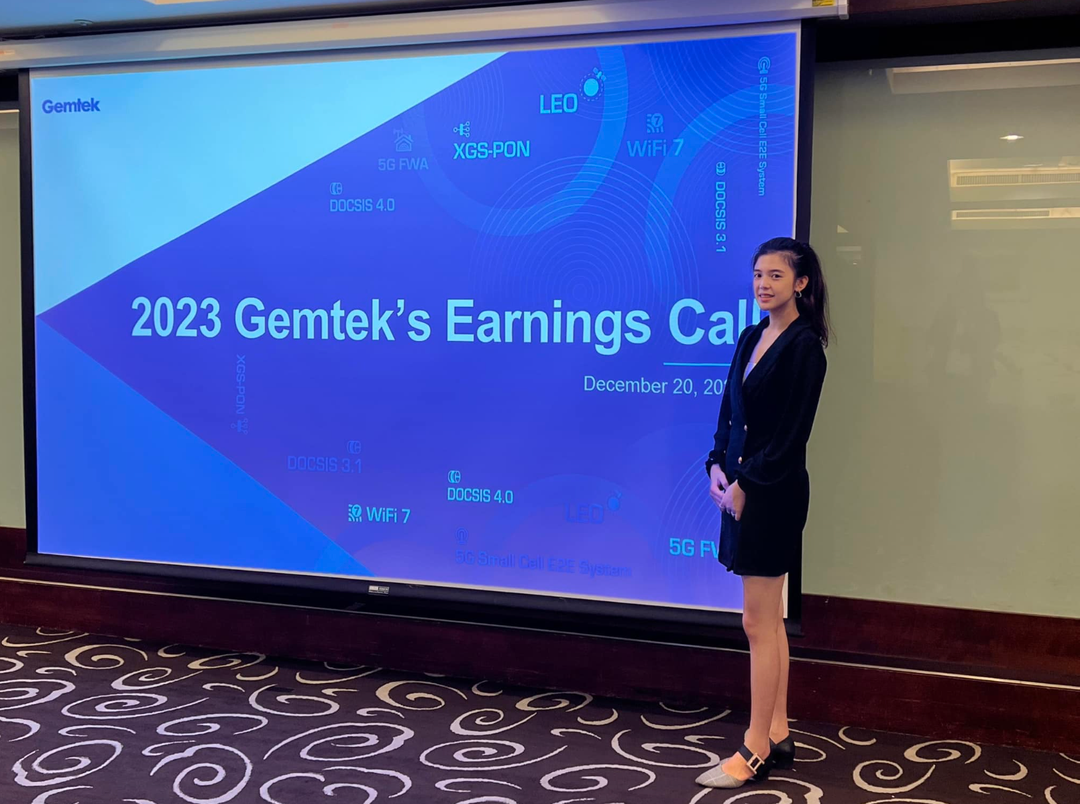
📍What is IR?
First, a quick primer. IR stands for Investor Relations. For many people it's an unfamiliar field. When I applied for a credit card in person last month, for example, the bank officer's reaction on hearing my job title was “wow, that's so unusual.” But in fact, demand for this role in the industry keeps growing. It isn't only listed companies that need it: even companies still raising funds and preparing to list on the stock exchange or OTC market need professionals in this area.
Let's first see what Wikipedia says.
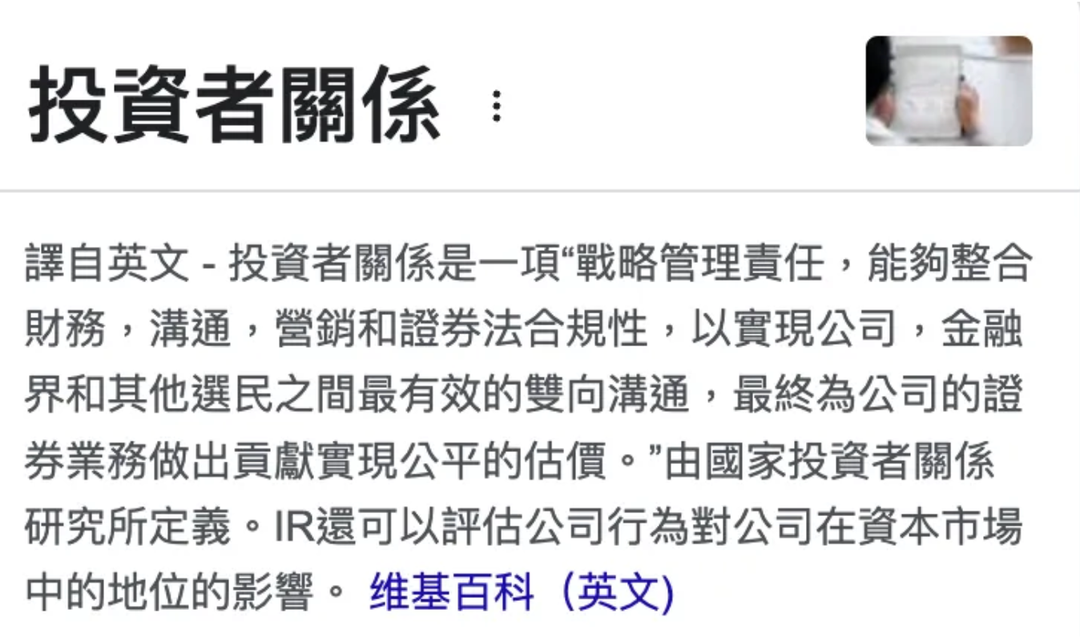
In fact, what IR can do, has to do and should do covers a very wide range. Every company has different needs, so how the IR role is defined and how responsibilities are divided also differ. Even at Gemtek Technology, where I work, the definition of IR has varied slightly over time, adjusted to the company's situation in each period. In this post I'll share based on what I've personally experienced.
So, first take thirty seconds to look at what I wrote on my résumé!
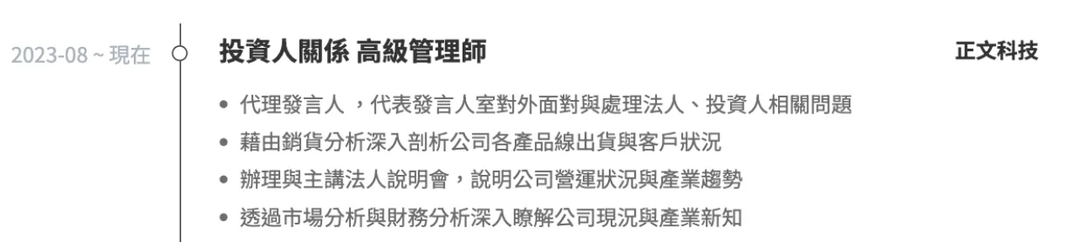
📍Deputy spokesperson
At Gemtek Technology, IR sits in the spokesperson's office, which is the company's external communications unit. Normally, apart from the spokesperson, it's just you (that is, me). In other words, everyone outside the company, including investors, institutional investors (securities firms, investment trust companies and so on) and journalists, is yours to deal with. Looked at from the “deputy spokesperson” angle, IR is like PR for the financial world. After all, whether you call it 投資人「關係」 in Chinese or investor “relations’’, it really is all about people.
So what do you have to handle when dealing with these groups? The simplest yet most troublesome are investors, especially small shareholders and retail investors. Retail investors are sensitive to share price swings, and even more so when they have IR's contact details: often, before you've even had a chance to glance at how the market is doing that day, a shareholder is already calling in with anxious questions. As for institutional investors, it's mainly hosting analysts, investment managers and people in similar roles from securities firms and investment trust companies; I'll go into this in detail in another section below. The last group, journalists, is the least common of the three. Journalists usually take the initiative: they might contact IR when they want an in-depth look at topics like industry trends, the state of the world economy or upstream and downstream raw materials, mainly to set up an interview or ask questions.
📍Sales analysis makes you the person who knows the company best
As mentioned above, IR has to give official responses externally, so apart from the company's big shots like the president and the chairman, IR has to stay constantly up to date on the company's latest situation. For example, at the end of every quarter there's a set of financial statements. By studying them you can learn key information, such as the operating revenue, operating costs, operating expenses, gross margin, EPS and so on in the “statement of comprehensive income.” These are the figures institutional investors care about most, and the ones IR should know best. I'd actually never done a related job before I started, so how to read financial statements and what each figure means were things I taught myself on the job. Honestly it was pretty hard at the start, but once you're familiar with it, it feels as comfortable as a daily routine! Let's save DIY financial statement learning for beginners for my next post!
Besides that, “sales analysis” is another very important tool. At the end of each quarter there are financial statements, and likewise there's a detailed sales record. Put simply, it spells out entry by entry what the company shipped that quarter, to whom, to where and so on. How you analyze it is of course up to you. Some people use Excel's built-in pivot tables (recommended for beginners); I chose to put Python, the analysis tool I learned in grad school, to use. No analysis tool is better or worse; whatever you can get the hang of is a good method. But I still have to give a personal plug for Python's matplotlib package: for business school people or data workers it's a great little helper for making charts, and it's very flexible too!
📍Presenting at/hosting investor conferences
An investor conference (法人說明會, usually shortened to 法說會) comes in two main forms. The first is one the company may host itself each year, called a “self-hosted investor conference.” The other is the one I'll talk about now, the “invited investor conference.”
Invited investor conferences are usually organized by securities firms, investment trust companies and the like. They invite a company to take part in that quarter's investor conference, then help open registration to other institutional and individual investors. Simply put, someone takes it on themselves to organize the event for you and then invites the audience for you. My SOP for this at Gemtek Technology is to finish all the analyses above thoroughly and pull the key information into a slide deck, covering operating performance (from the financial statement analysis), the current product mix (from the sales analysis), industry trend analysis, and a discussion of the current political and economic situation. I present and explain each part in the meeting, and the last 1/2 to 1/3 or so of the time is Q&A, left for them to ask questions.
This part is actually pretty challenging for a new IR person. Institutional investors don't just ask about the company itself; they also want to learn about your upstream and downstream raw materials through you. So a good IR person needs to keep up with new developments diligently. Besides improving yourself, you also have to stay in close contact and communication with the company's other departments.
Day to day, IR works closely with the finance and operations departments, and that cuts both ways. The challenge is that the people you deal with at work are all very senior executives (ex. the chairman, the spokesperson, the president, department heads, etc.…), so there's very little margin for error in what you say and do. But that's also an advantage: your effort and expertise are put in the spotlight and magnified.
Besides the main tasks above, the company's monthly revenue, quarterly reports, related press releases, material information and so on all have to be calculated, checked and then released and announced through IR. In my view, as a first full-time job straight into the workforce, IR is very intense and carries heavy responsibility, but in return, the people you get to deal with and the work you do give you a relatively high starting point. It's a really good opportunity to push yourself and gain experience. Also, because Gemtek Technology is a tech company in networking and communications, the knowledge and new developments in this field run very deep. Outside the scope of the IR work itself, I spend nearly all my remaining time studying the networking field and the latest on upstream and downstream suppliers, so that my industry analysis and insight get sharper.
📍What's the career path for IR?
Without further ado, here's the chart!
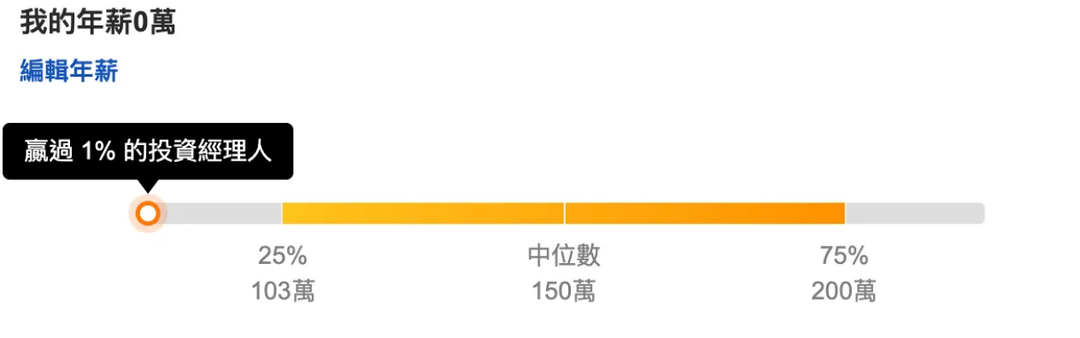
This is surely the part most people are curious about. Because of salary confidentiality clauses, I'm of course not going to share my own numbers😀 but here are the statistics from 104 Job Bank. As things stand, for a non-R&D role it should be very attractive, with plenty of room to grow.
As for people who don't want to stay in IR, every exchange with institutional investors lets you learn and understand a lot about how industries work. So if you want to move toward being an investment manager at a brokerage or investment bank in the future, IR is a great training ground. Visit after visit and meeting after meeting, you'll learn more precisely what the other side really wants to know. I think this makes a future career change much easier, and makes it easier for you to analyze problems from the right angle and get to the point.
Final thoughts
I believe this post is the most complete piece on IR among existing online resources, and also the most thorough introduction to the actual scope of the job. I hope it helps people interested in this field understand whether this kind of career suits them, or simply spreads some industry knowledge, so that next time someone introduces themselves with “Hi! I'm in investor relations at such-and-such company,” you won't be left completely lost.
That's it for this time. If you'd like more detailed posts, keep following my channel for new articles. If you have related questions or suggestions, feel free to reach me on LinkedIn, and if you found this post helpful, a few claps would be very welcome🤩

陳毅
Dec 28, 2023
好棒🫶🏻
Ariel 陳佑青
Dec 30, 2023
Thank u🫶🏻

Kelvin Wang
Dec 28, 2023
推用心!
Ariel 陳佑青
Dec 30, 2023
謝謝😊

Jin Cathy
Dec 29, 2023
第一次聽說IR這個職位
Ariel 陳佑青
Dec 30, 2023
以後不怕聽不懂了😆