Translated by OfferLand from the original Traditional Chinese post. View original

小歐特派員
Updated Oct 23, 2024
Journalism Master's | NTHU Dual-Specialty Program, Exchange in Israel: Paisley's Cross-Disciplinary Application
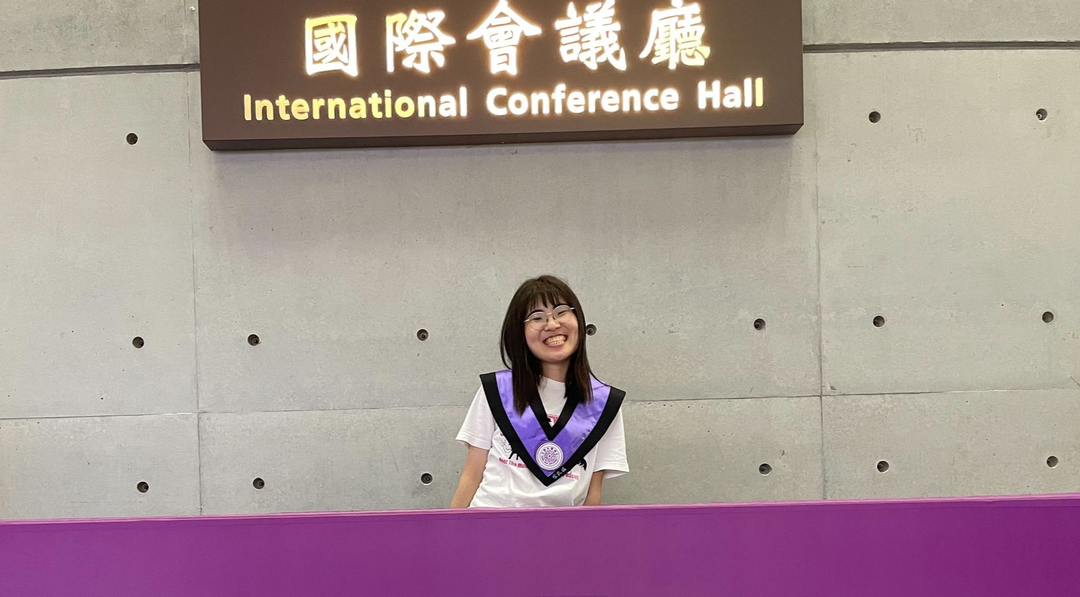
Hi, I'm Paisley. I just graduated this year from the undergraduate program of the College of Technology Management at National Tsing Hua University (NTHU), and I'm about to start a two-year master's in journalism at Boston University. It's a big change of field for me, and it means I'll face plenty of challenges studying in the US, but I'm really happy that after a lot of hard work I've finally made it here. I hope that you, reading this, find colorful views along your own study-abroad journey!
1. Why I applied to study abroad
Why study Journalism abroad?
As a student in NTHU's dual-specialty program, why did you want to apply to Journalism?
What particularly interests you about Journalism/Media Science, or what do you hope to get out of it?
When I was heading into college I (like many people?) didn't really know how to choose a major, and ended up at NTHU more or less by chance. For a while after starting college, I had a vague feeling that I wanted to study journalism, but NTHU has no communication department, so I wanted to use my college years to figure out whether I really wanted to study it. During college a lot happened, both around me and in society, which showed me how deeply the media shape the way people see the world. At the same time, I found I was really passionate about interviewing and writing (though not necessarily good at them). I don't expect that becoming a reporter will really make me someone who conveys the truth or upholds justice, but I hope to become more alert to injustice in society and able to tell what's false, and even better, able to stand up and speak out.
What ultimately made you choose Journalism at Boston University?
What did you consider when choosing schools to apply to?
Location was my main consideration. I was sure I wanted to be on the US East Coast and in a big city, so I only applied to East Coast schools. I'd suggest starting from factors like weather, safety, transportation and whether you know anyone there.
Why did you finally choose Journalism at Boston University?
BU was the highest-ranked school that gave me an offer, and it also gave me a scholarship. On top of that, Boston is a city with relatively good safety and quality of life, and my friends in the US strongly recommended it. Also, when I attended online admissions info sessions and emailed the school with questions about applying, the professors and staff were all very friendly, which left a good impression.
What are you most looking forward to learning and developing in Boston University's Journalism program?
I'm looking forward to seeing how news is produced in the US, and to building my teamwork skills, especially working with people from completely different cultural backgrounds. Also, I don't have much real experience working in journalism, and resilience under pressure and the ability to work at a fast pace are very important for reporters. So I want to train myself to work in high-pressure environments, and learn how to find meaningful stories in limited time and turn events into impactful narratives.
2. Preparing my applications
How did you highlight your strengths when preparing your application materials (CV, Personal Statement, Writing Sample)?
Although these materials are for the school, I think preparing them is also a chance to sort through your experiences of studying and self-discovery from childhood on, and to reflect on what's distinctive about your experiences and what led you to want to enter this field. My most obvious weaknesses were: one, I didn't major in journalism; two, I'm not American, let alone a native English speaker. But looked at another way, these traits "might" give me experiences and perspectives other applicants don't have.
What challenges did you face preparing your application documents and language tests? How did you overcome them?
One huge challenge was self-doubt. Apart from the admissions Committee, nobody can say for sure what makes a good SOP or which version is most persuasive, so it's easy to start overthinking as you write, ending up with several versions without knowing which one fits best. What helped me was talking to people: I showed my SOP to friends and family and asked for feedback. Of course their views won't necessarily match the school's, but their third-party perspective showed me where my writing might not flow logically and where I should phrase things differently to make them easier to understand.
Writing the SOP also takes a huge amount of time and energy. For a long stretch I felt my progress had stalled, as if I'd spent countless hours on the same document without any breakthrough, and that kind of pressure is really hard on your mental and physical health. One coping method that worked pretty well for me was writing down each week what I'd done that week, like how far I'd gotten on my essays, what changes I'd made, which schools I'd emailed or what interview prep I'd done. Recording these small wins at least gave me some peace of mind.
3. How my experiences helped my application
Your résumé shows a wealth of internships and volunteer work. Could you share one or two experiences that most inspired your application to Journalism?
Honestly, I joined most activities just because they interested me, without thinking about how they'd look on my résumé. But looking back now, after volunteering at many different organizations, I realized I love interacting with people and hearing all kinds of unusual experiences and stories, and that I want to keep learning new things and see how people from different backgrounds think and form their worldviews. These experiences made clear to me that I wanted to study journalism.
Your reporter role at National Tsing Hua University's Regional Innovation Center seems to have been an important step into journalism. Could you describe in detail how it strengthened your journalism skills, and how important it was for your Journalism application?
The biggest help was the chance to build a portfolio, which I could translate into English and submit as Writing samples when applying. It also confirmed for me that I really love producing news and talking with people.
Why did you choose to go on exchange to Tel Aviv University and National Chengchi University? How did these exchanges affect you?
I went on exchange to Israel because I was very curious about the country and wanted to challenge myself to see whether I could survive in a completely unfamiliar environment. The exchange showed me what challenges I might face living in a foreign country and how I should handle them, such as adapting to the language, food and culture. It also trained me to live frugally somewhere expensive. And it showed me that the picture of a country painted by the media is often incomplete: although the Israel you see in the news always seems to be in turmoil, most people there are actually pursuing stable, peaceful lives. Less than a year after I left Israel, war broke out. Besides the shock, it reminded me to cherish the present and to hurry up and do the things I want to do.
As for NCCU, NTHU and NCCU happen to have an inter-university exchange system, and NCCU's College of Communication has great course offerings. Put simply, it showed me what journalism students learn and confirmed that this is the direction I want to study further. I was also surrounded by communication and journalism students, so I could learn what internships and skills they'd built up and how they planned their studies and careers. And of course, finding professors at NCCU willing to write me recommendation letters was a very practical help for my applications.
4. Other
What would you choose if you could redo college?
If you could choose your college major again, would you go straight into a journalism-related major? Why?
If I could do it over, I might. But I also suspect that if I'd actually picked journalism as a freshman, I might well not have ended up on this path, haha. In Taiwan, reporters work in a really tough, high-pressure environment, and I might have given in to that pressure early on. Maybe it's precisely because I didn't study a related major in college, and happened to attend a school focused on science and engineering where journalism and media courses were scarce, that I came to long for journalism so much. I don't think I chose the wrong major or wasted my time at all. The management/economics courses I took these past few years taught me a lot, and NTHU gave me a lot of latitude: after finishing my department's credits, I had plenty of time to explore other things, like spending a year and a half taking classes at NCCU.
A few words for younger students with the same goal
What advice would you give students who also want to switch into journalism from a non-journalism background, to make them more competitive in journalism and media?
I'm sure everyone will think of looking for more journalism internships, but before that, it may help to get to know friends or professionals in the field and learn about their study and career paths, so you can see clearly whether the field suits you. Next, find issues you're passionate about, such as politics, finance, the environment or human rights, or combine journalism with your own background, like data analysis or video production, so you stand out from competitors who have journalism backgrounds. In short, I think for anyone who wants to switch fields, the most important thing is to really get to know yourself first!
What do you think is the most important skill or experience when preparing to apply to journalism programs?
For journalists, storytelling is a crucial skill, and when applying to schools, writing the SOP is the first chance to show it. Only when your SOP presents your traits and experiences clearly and persuasively will the school see that you're capable of writing about news events. So I think the SOP must be carefully polished. It doesn't have to read like a native speaker wrote it, but it should show your personal qualities and your ability to tell your own story.
Schools in this post
See each school's applicant numbers, admit rates and past applicants' results

已封鎖用戶-c893d25d
Jun 24
This comment has been deleted