Translated by OfferLand from the original Traditional Chinese post. View original

小歐特派員
Updated Oct 23, 2024
From International Business to Data Journalism: Charlene's Career-Switch Application
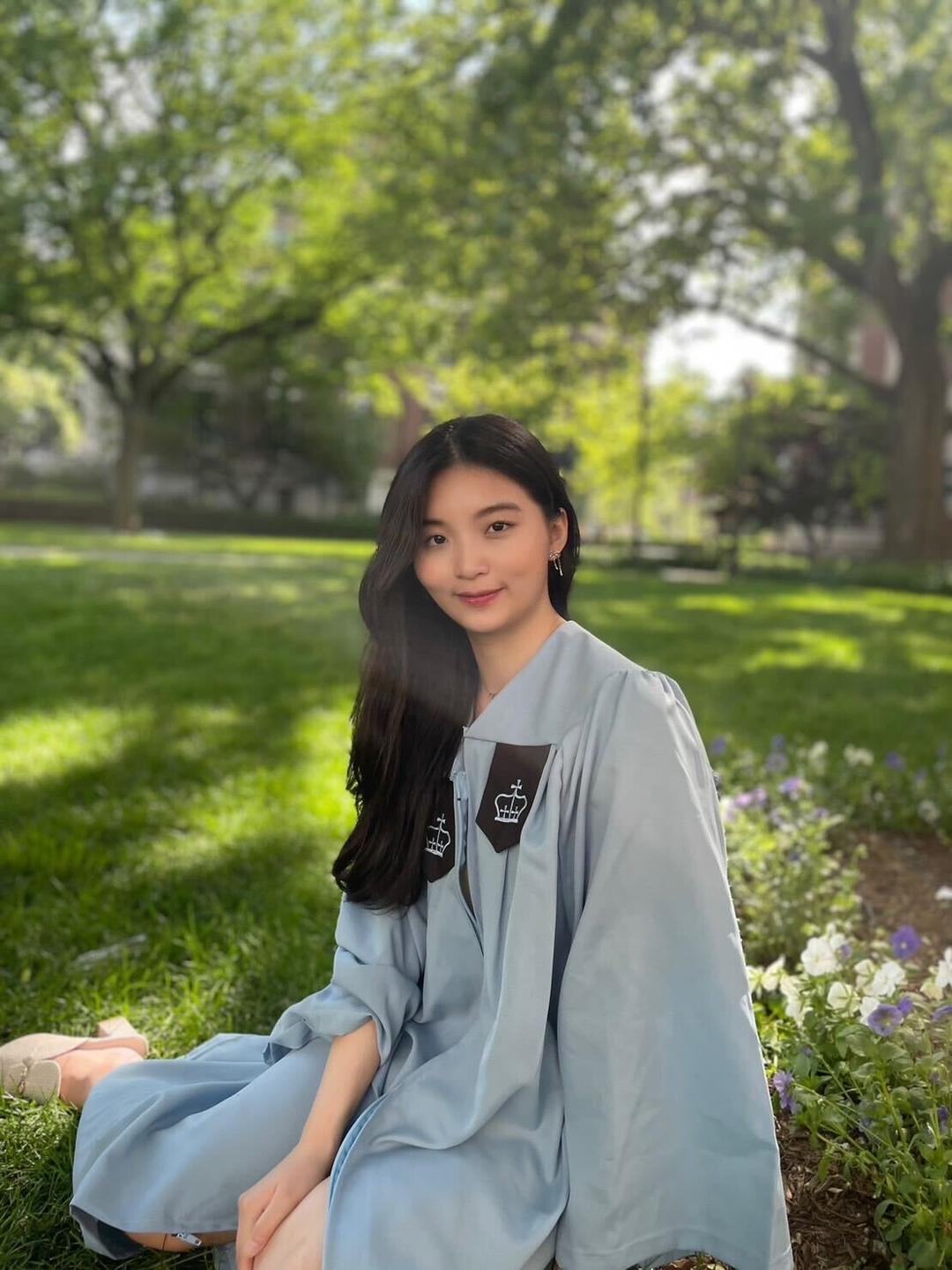
Hii, I'm Charlene! I graduated from the Department of International Business at National Taiwan University (NTU). In college I tried internships in all sorts of industries and found I was especially interested in the content industry; I also enjoy thinking things through and analyzing them. In my first year after graduating, I applied to data journalism grad programs while working, hoping to apply data analysis and the skill of researching the context behind events to producing news. I was lucky enough to get an offer and a scholarship from Columbia's data journalism program.
1. Why I applied to study abroad
Why study abroad?
When did you first think about doing a master's abroad?
I'd long heard the saying "come, come, come to NTU; go, go, go to America," and kept hearing about upperclassmen going abroad, but I never particularly longed for it. Hardly anyone in my family had studied abroad, so it wasn't easy for me to picture. In college I spent a few months on exchange in the UK. I wanted to go home before even three months were up, but I also remember that academic culture in the UK and US seemed much freer than in Taiwan: you could take courses you were interested in without constantly thinking about whether they'd pay off or whether they were easy A's, and professors all seemed to genuinely love their fields. At NTU, by contrast, quite a few professors ended up in a department because of their exam scores back in the day and just kept studying until they became PhDs and professors, without showing much passion. Maybe that's when I started longing for a way of learning freely without too many worries.
Only a few months into working after graduation, I started feeling that although life was fairly comfortable, if I kept living like that for three or five years, I'd feel trapped. So I began to wonder whether I should go out while I was young and experience different cultures and broaden my worldview.
Why did you choose Data Journalism at Columbia University?
Around junior year I did a news internship and really liked the work. But because journalists in Taiwan have such a bad reputation, I couldn't shake the mental shackle of "but I'm educated, how could I become a reporter?" and didn't have the courage to switch from a business-school career path to journalism. While I was chatting with a friend back then, my friend found Columbia's data journalism program and sent me the link, and that planted a seed in my mind. I figured that being a pure print reporter didn't require spending millions on another degree, but data science seemed like an area with a lot to learn. If I could work in American journalism, I couldn't out-write others in English, but being able to do data analysis and code would give me much more confidence. This program is also the only STEM program at Columbia Journalism School, which is an advantage for visas.
Have the resources Columbia University offers helped you reach your original academic goals and plans?
For me personally, the skills from this year are exactly what I wanted to learn, and whether or not my career goes well, they help in my personal life too. The program trained me to handle large, complex datasets and introduced me to many investigative tools for getting closer to the truth, and I can apply these skills to all aspects of life. Beyond skills, I think the biggest gain was raising my sense of what outstanding work can look like by seeing it firsthand and broadening my horizons. In class we often get an up-close look at how American data journalism is made, and the school invites the authors to tell us that making such work is genuinely possible. That way you're not stuck with an outsider's limits, or only able to copy what others have done from afar and fall into clichés.
As for career goals, people generally say a Columbia Journalism degree automatically opens a lot of doors. As an international student, I'm surely not in as much demand as American students, but I did get interview invitations from New York media outlets, which found me by searching the school's résumé database directly. Being able to start out in New York fits my goals well in itself, and getting a degree there may be one way to get into international media quickly. Otherwise, starting at local media in your own country often means grinding for many years before international outlets hire you, and the stories you can cover are limited by your experience.
Why Data Journalism?
Going from international business to Data Journalism is a big shift. What led you to make that decision?
Honestly, I don't think the difference in skills is that big. Many jobs for business-school graduates are business analysis, and the research I did before at a management consulting firm isn't very different from the research in data journalism. Both require quickly understanding an industry or topic, running some data analysis, and explaining it in plain terms to the people who need to know. Whatever the industry, what you need to fully understand is "what's happening in the world." Perhaps in a purely business career the insights from that understanding are used to make profits and grow the business, while in journalism they serve the public, giving citizens the information they need to help everyone make better decisions and think and act more thoughtfully in daily life. After this program I didn't feel my skills had shifted much, but the purpose of serving society, and the relatively idealistic side inherent in journalism, were very persuasive to me.
How does Data Journalism relate to your previous experience?
I'd done two journalism internships before, and otherwise dabbled in all sorts of things: a documentary streaming platform, editing at a prep school, a media agency, plus research work in digital marketing and management consulting. All of these made me realize that work related to content production really appeals to me. I enjoy savoring text and discovering new things between the lines, and I feel it's only by understanding complex contexts and peeling things apart layer by layer that we can understand life and the human condition more deeply. That sounds very profound, but maybe I'm just the kind of person who's especially curious about these things. I think it's something I pursue in life.
2. Preparing my applications
Application prep
When did you start planning to apply to Columbia University? How long did the whole preparation take?
Around June I felt I'd probably apply, in August I decided I should practice for the TOEFL, in September I started looking at programs and preparing more seriously, and by mid-December I submitted my application. About three to four months in total.
How did you plan and prioritize each part of your application materials, including the SOP, CV, essays, writing samples and language tests?
Language test: Columbia Journalism School's language requirement is fairly high (TOEFL 114/ IELTS 8). Back then I thought it would be really hard for a homegrown local like me, and I mistakenly believed that if I didn't hit it, nothing else would matter, so I spent most of my time preparing for the TOEFL. If I'd known earlier that the requirement wasn't a hard cutoff, I might have spent more time on my documents, or decisively dropped the TOEFL, whose format I already knew, for the IELTS, which people find easier.
CV: In business school you always have to keep your résumé ready, so I just added one line about my job at the time and didn't put much more effort into it.
Essays: there were three, and I did write intensively for almost a month. Writing them well is genuinely hard, and I had no experience writing long English essays; it was basically my first time. So it was hard to know what kind of document the school wanted to see, and I didn't find the résumé-style application essays out there for engineering, business school or data science very useful. In the end I produced a few essays I'd call sincere (even with plenty of flaws), covering my life story, my values and the few big events that really shaped this decision. My personal statement in particular went for a lyrical, moving narrative, and I ended it with a line of poetry representing my outlook on life.
Writing samples: three of those too. At the time I only had two stories I'd originally written in English. The other was a fact-check I'd written in Chinese on Dcard about a Paris metro scam, so I cleaned it up and translated it into English. Looking back, my earlier English stories were truly painful to read, so I had an American who specializes in editing application documents fix the wording issues and so on. Pulling these three together didn't take long (maybe two weeks), though I'm guessing they weren't particularly outstanding pieces. I'm an outsider, after all.
The application process
Did you apply on your own or get help through other channels?
I didn't hire a study-abroad agency. Work was already pretty stressful, so I had no appetite for applying to lots of schools, and I handled most things myself. I did ask some friends to share sample documents or look over my writing and give me suggestions. For the essays, I happened to know an American at the time who helped me a lot. My English vocabulary back then meant I couldn't quite say what I meant, so he'd ask what exactly I wanted to express and then show me a better way to write it. The final version was edited by an elderly American gentleman who used to work at NTU's English writing center, but he overslept on the last round⋯⋯ so I had to submit essays that weren't fully edited.
What was the most challenging part of the application process for you? How did you overcome it?
I was truly starting from zero. A lot of things I was hearing about for the first time, and I had no clue how to write the documents. Almost no one around me had applied to an American journalism school, so I could only use common sense to imagine it or dig through posts on Xiaohongshu. Countless late nights and weekends I was in the office poring over these documents and figuring out how to write them, and by the end I didn't know how well I'd done on a lot of it. I submitted my applications in a daze. By then I'd gone into a zen, let-it-be mode: of course I hoped to get in, but I felt that once I'd done my best, the rest was up to fate.
What factors do you think ultimately helped you get into Data Journalism at Columbia University?
On a very practical level, maybe my education and experience meant I didn't need much extra effort to prove my baseline ability. On the other hand, I think if I'd followed the standard application-essay templates out there, I probably wouldn't have gotten in, or wouldn't have gotten the scholarship. I read a lot of examples, but in the end decided to trust my instincts and describe my experiences and past based on my understanding of what journalism is and an honest look inward. My application essays were surely far, far worse than those of my classmates who are native English speakers or industry veterans seven or eight years older than me, and my English really wasn't good enough. But I think a sincere personal account can bring out a certain individuality to some degree, whereas an application with no distinctive features that follows a template would easily sink without a trace.
3. How my experiences helped my application
Past internships and work experience
You majored in international business at NTU, but your experience at Unique Business News and beBit Inc. leans toward media. What led you to choose internships and jobs different from your major?
Maybe I'm just not that interested in pure business analysis. Also, the International Business department's reputation isn't only about its many industry leaders; our alumni have left their mark in all kinds of industries, like food and beverage and film and entertainment. That made me feel I didn't have to limit myself to the few industries most people go into. Actually, neither the Unique Business News nor the beBit opportunity was my original plan for those summers. I'd first gone to intern at other companies, but each time ran into a toxic culture I couldn't accept or an outrageous manager, so I quit overnight, then happened to get the chance to join these two companies, and was lucky enough that both went quite smoothly. The digital marketing work at beBit is actually still very relevant to international business; it gave me hands-on experience running ad campaigns, plus some chances to do business writing.
How did your internships and work at McKinsey, Unique Business News and beBit Inc. influence your decision to apply to Data Journalism, and how did they help you stand out in the application process?
What these experiences have in common is that they made me realize I'm very sensitive to writing and communication, and that given my interest in a broad range of knowledge and topics, a career spanning a wide range of subjects would be ideal. I'd guess McKinsey, being a fairly well-known company, made my application more memorable. But so far, many people I've met in journalism have very polarized impressions of McKinsey, so I'm not sure whether, beyond being memorable, it was a plus or a minus. Having some journalism internship experience and attempts usually helps; it shows I'm genuinely interested and have acted on it.
What challenges did you face in these jobs, and how did you overcome them? How did these experiences contribute to your personal growth?
Skills-wise it wasn't too bad: whatever I didn't know, I learned. The learning curve was always pretty steep, and I like it that way. The challenge was usually in getting along with all kinds of people: learning how to deal with people I found unreasonable, or whose values or way of doing things differed from mine, and then iterating on my worldview. The years from college to being a new graduate really are the golden period for shaping your worldview. Moving back and forth between news media, where working conditions are generally poor, and consulting, which prizes elitism and selectivity, broadened my understanding of the world to some extent, and I found a sense of belonging in each field. During my year at journalism school I often missed the low communication overhead, high efficiency and good benefits of working with people in consulting, and the basic respect between people that was never absent. At the same time, I firmly believe that even though journalism is a mixed bag, it has admirable veterans who truly care about the truth and about others.
4. Other
A few words for younger students
What advice do you have for applicants without a background in journalism or data analysis?
I think fields and skills are surface-level things; only by digging deeper do you find the values and personal traits tied to them. If you truly believe this is what you're interested in, you'll be able to find a convincing reason through reflection. If your background really is unrelated, of course you'll need some effort to tell your story well, so you could talk about what you want to achieve by studying data journalism, or which works have inspired you, and so on. Data journalism still isn't mainstream, and many people don't know or care about it, so showing that you've been following trends in the field should be a big plus.
For students who want to apply to data journalism programs, which skills or knowledge do you suggest they build in advance?
Building a foundation in basic programming early will of course make things easier later and let you move quickly into more advanced technical work. Actually, unless you're doing data visualization, most data analysis done for reporting isn't that hard. For beginners, the harder part is probably imagining how to use specific tools and methodologies to reach insightful conclusions. Look at a lot of data journalism and read their methodology posts (more reputable outlets include them) to understand how the pieces were made. That way, whether you come from pure journalism, pure data or another background such as social science, you should find some inspiration in them, and you can think about whether going through that production process (finding a topic, gathering information, designing a methodology, interviewing, repeatedly verifying information) is what you want to do, and if so, roughly what kinds of stories you'd want to pursue.
If someone wants to apply to similar programs, where would you suggest they start preparing?
I'll take "similar programs" to mean journalism and communication programs~
I think news judgment is a pretty important basic sense. Making a habit of reading the news and following current events regularly helps a lot with judging what's newsworthy. Most of the time journalism is all about ideas; you need an endless supply of ideas to pitch, and in my interview I was also asked what stories I'd want to do. Being well-read and well-informed helps a lot in shaping ideas. This should matter for mass communication programs too, since a key part of those fields is understanding the public and communicating information that's accurate and that people can understand and accept.
What would you choose if you could redo college?
If you could choose your college major again, would you choose differently? Why?
Honestly, I think having to choose a major right out of high school is far too early. Because of Taiwan's education system, every department has a score and a status attached, so most people can't freely choose the field they're actually interested in. After business school, I know quite clearly that my interests really aren't in pure business. But given the circumstances at the time, being able to choose this department thanks to high scores did let me hold my head up, and because I had no regrets about bombing an exam, I didn't need to spend energy making up for the past and could look ahead with peace of mind and pursue what I really want. International Business alumni also have a long history of doing well in all kinds of fields. My supervisor during my TV station internship was an International Business alumna from decades ago who was a very successful news anchor in her day. That also made me feel moving into another field isn't a big deal, so if the circumstances were the same, I'd still choose NTU International Business.
Schools in this post
See each school's applicant numbers, admit rates and past applicants' results