Translated by OfferLand from the original Traditional Chinese post. View original

SK2 TOEFL 共同創辦人David
Feb 12
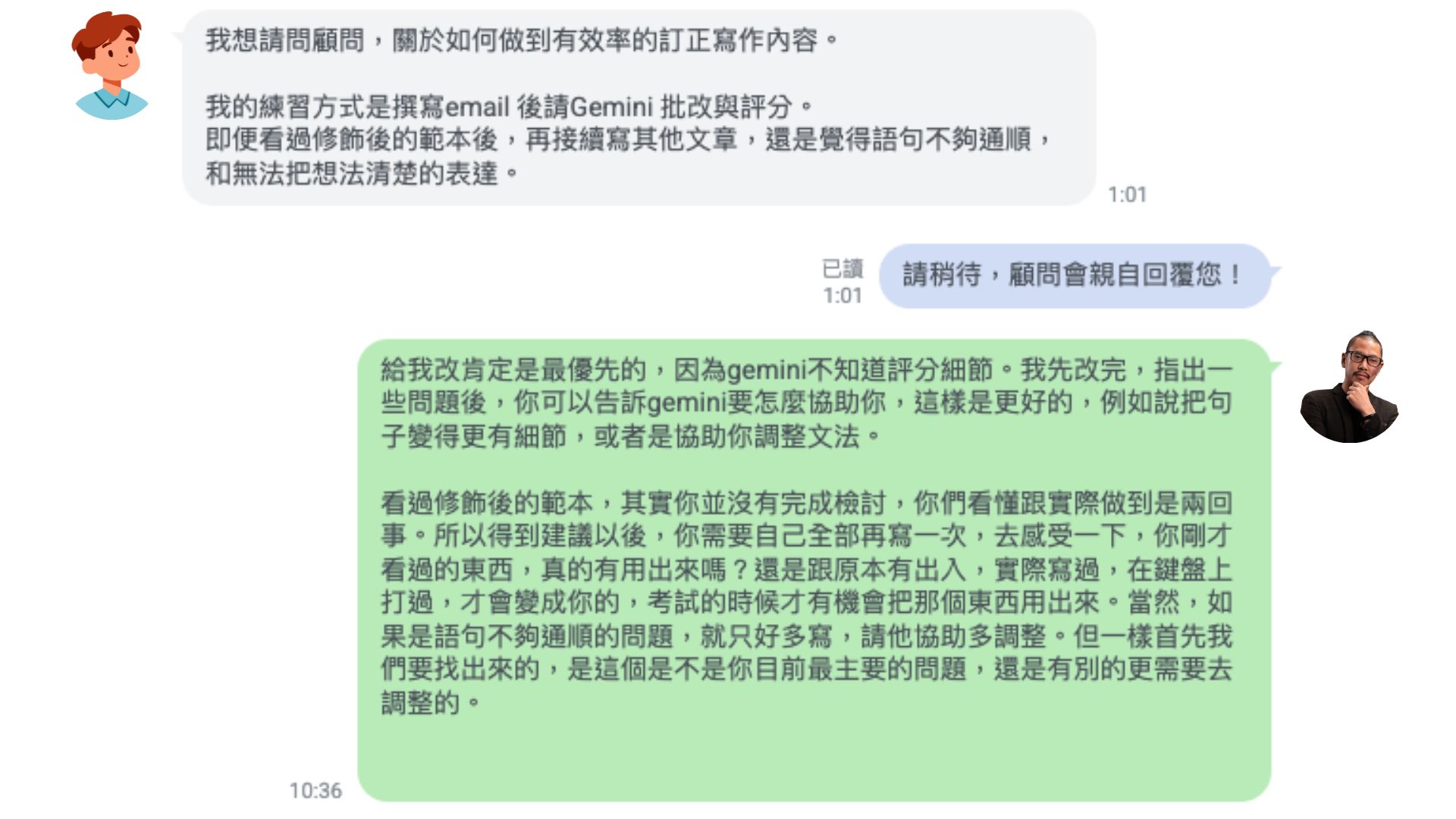
"Teacher, what's an effective way to review my TOEFL/IELTS writing?"
Hi everyone, I'm David, lead consultant of the SK2 TOEFL new-format TOEFL intensive course, with a 6.0/6.0 on the new TOEFL.
In the month since the new TOEFL format launched, I've marked nearly a hundred new-format essays from dozens of students. Here are two important lessons I want to share:
1. Many people think "reading model essays = being able to write," but there's a big difference. Much of the time there's a gap between understanding something and being able to do it.
The key to correcting an essay effectively is:
First have a teacher use the scoring rubric to point out where the new TOEFL would take points off. Then, following the feedback, "rewrite" that sentence or paragraph, so the new sentence patterns and structure become part of your memory, not just a vague impression.
You read the model essay, you understand the feedback, and then you actually write it out, type it yourself and build the sentence. Only then does the sentence become yours. If you've only read it, you may keep making the same mistakes.
That's why what matters isn't how many essays you've written, but how many times you've revised the same essay.
In my own classes, I ask students to revise and correct the same essay three rounds, precisely so they can "build a template."
2. Some students hand their whole essay to AI to fix. Is that a good idea?
AI is great. It can fix your grammar and fill in details, but it doesn't understand the scoring criteria of a specific exam, so its scores are of little value as a reference, and its suggestions often miss the point.
So the best approach is to give your essay (and your audio recordings) to a teacher first, someone who has taken the exam and has marked enough students' essays and recordings, and let them tell you: what is the main problem with your essay?
Are the sentences awkward? Is the structure off? Are your examples just restating the point without being persuasive? Or is it grammar?
Once you've found the problems, use AI as much as you can when you practice on your own. Tell it clearly: "I think this sentence doesn't read smoothly. Please adjust it and give me three different versions to choose from." Then, combining this with the first point, after reading the three AI versions, write it yourself once more. That's what you can actually do once you understand it.
In other words, using AI to fix your grammar mistakes, make sentences smoother or practice developing examples, solving one clear problem at a time, is what I think works best. After that, have a teacher handle the big picture, meaning feedback and scoring aimed at new TOEFL writing. That's the most effective method.
This is what people mean when they say you have to ask AI the right questions. If you keep asking it, "What score would this essay get? Why that score?", it can only make up an answer for you. But if you ask it about what it's better at, like "How should I adjust this sentence?", its database is far more useful. It's in its element, and you get twice the result for half the effort.
That's the key that helped many students raise their new TOEFL writing from 3/4 to 5 and 5.5. I hope it helps.
* On 2/21, David is opening his retake exam experience session to students outside his course. Sign up here:
https://docs.google.com/forms/d/e/1FAIpQLScAMB0nFONnNwa4YmnGJqjGsTcEqNHXnDvCXMqLf_KvRWYZLA/viewform
